San Diego field note 03
A port city learns how to gather.
San Diego’s waterfront story includes working terminals, public parks, military connections, a historic resort and a popular-arts convention with deep local roots.
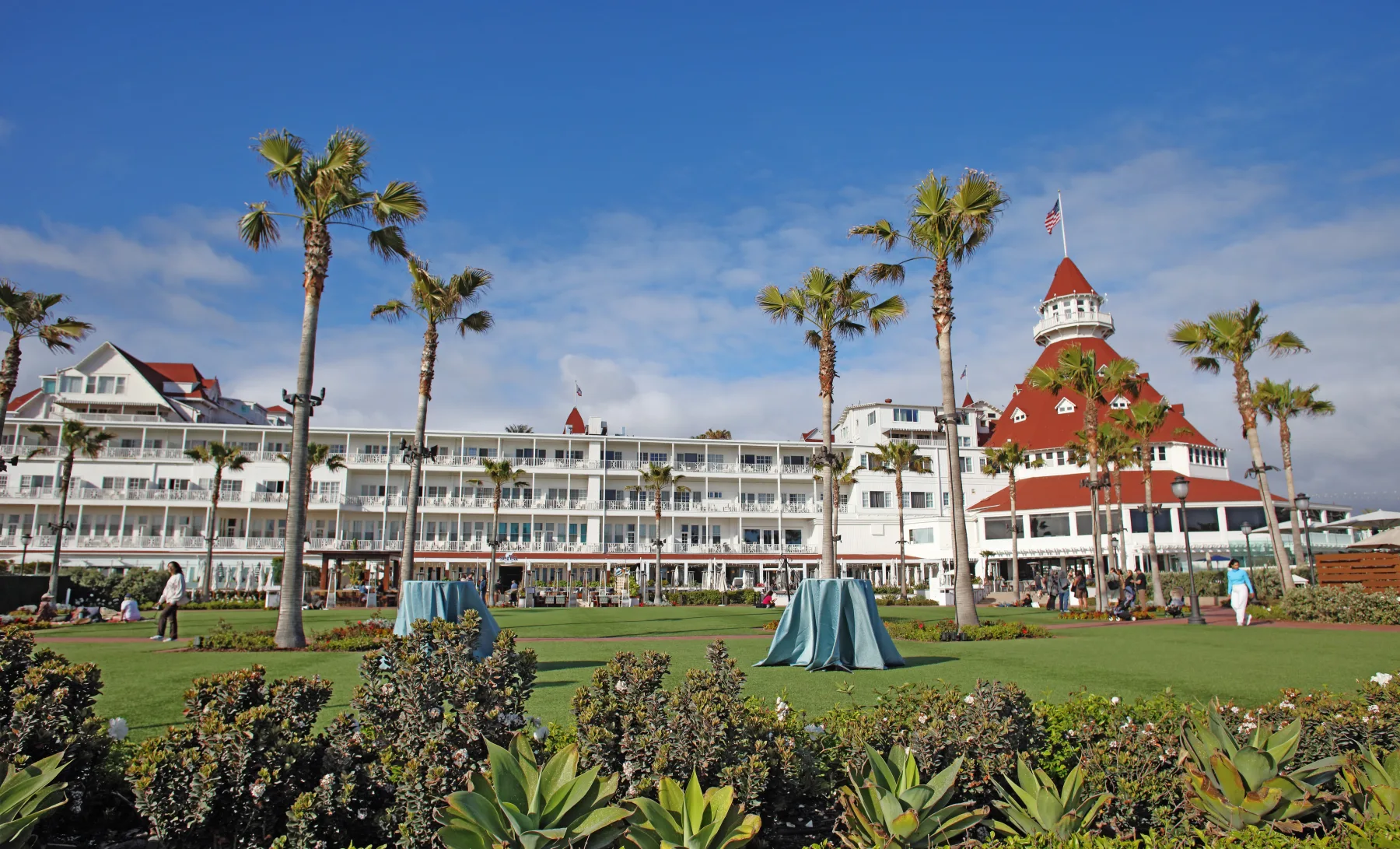
Photo by KMPhotoLA1; resized, converted to WebP and displayed with a crop under CC BY-SA 4.0.

San Diego Bay is both a workplace and a public landscape. The Port of San Diego was created by the California Legislature in 1962 and manages maritime cargo and cruise terminals along with waterfront parks and tenant businesses. Its history reflects the ongoing balance among commerce, recreation, environmental stewardship and regional access. A waterfront walk can feel leisurely while operating close to an active system of ships, terminals, roads and public safety services.
Military and maritime activity long predate the modern port district. The bay’s geography supported naval and commercial uses, while communities developed around connections to the Pacific. Visitors can learn parts of that story through official institutions and historic sites, but no single attraction represents the entire waterfront. A museum vessel, cargo terminal, naval facility and bayside park serve very different purposes and have different access rules.
Across the bay, Hotel del Coronado supplies another kind of maritime-era landmark. The National Park Service describes the 1888 hotel as an outstanding surviving example of the wooden Victorian seaside resort. Its prominent roofline and beach setting made it a visual symbol, but the place is also an operating property. Visitors should use current official information and respect areas reserved for guests or events.
San Diego’s gathering identity is not limited to the water. Comic-Con began in 1970 as an event devoted to comics and related popular art. The organization’s history records several name and venue changes before the convention settled into the San Diego Convention Center in 1991. Its programming expanded across comics, film, television, games, animation and other art forms. The scale of today’s event can obscure the fact that it started as a local nonprofit effort built around shared interests.
Together, these stories show a city practiced in movement and assembly: cargo arriving, ships departing, visitors staying, military personnel serving and fans converging downtown. That does not make the experiences interchangeable. It makes preparation valuable. Check official schedules, understand restricted areas, plan transportation and use current event guidance instead of relying on an old itinerary.
Large-event planning should begin with the organizer’s rules rather than resale posts or social media. Badges, bags, entry lines, accessibility services and off-site programming can change from year to year. Waterfront visitors likewise need current port and park guidance; a public promenade does not make an adjacent terminal public. At the hotel, restaurants, tours and beach access have distinct arrangements. A patient itinerary leaves room for security screening, transit delays and the fact that San Diego Bay remains an active workplace while visitors enjoy it.
A restrained insurance connection
A historic hotel, convention crowd or naval presence does not determine anyone’s personal liability exposure. They do offer a reminder that everyday activities can involve other people and property. Homeowners and auto policies contain liability sections with limits and exclusions; umbrella coverage may add limits or address some claims beyond underlying policies. The National Association of Insurance Commissioners umbrella overview explains the general relationship. Ask which underlying limits are required and which exclusions remain. The issued policy controls.